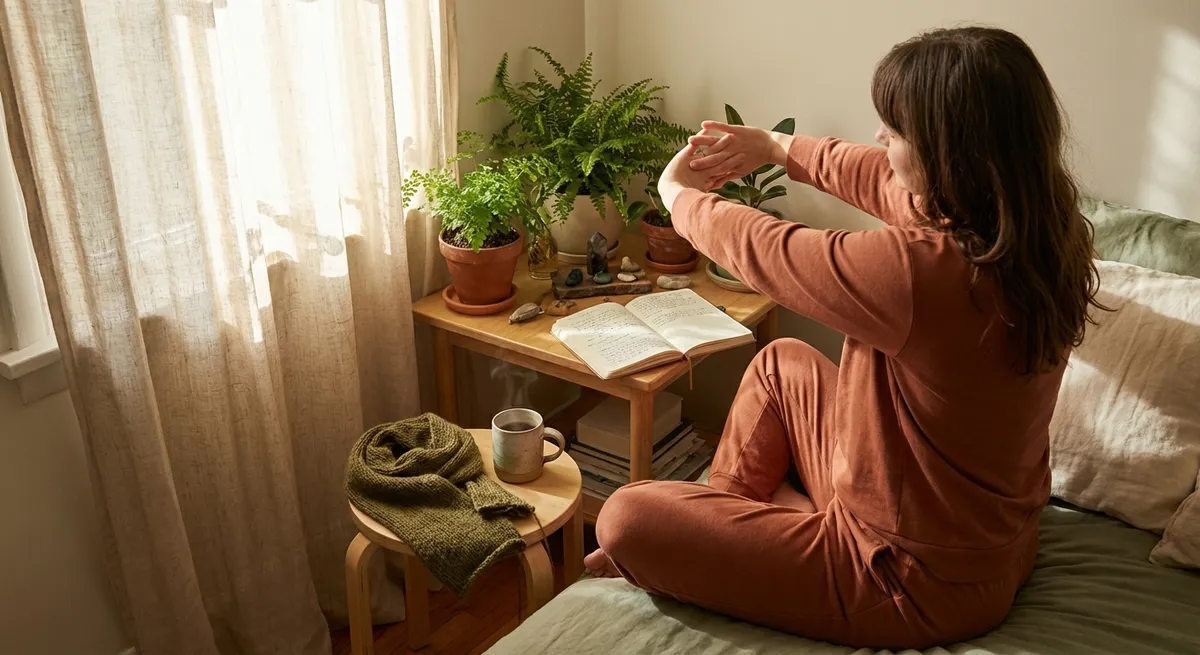
Some days, just getting through the basics feels like an achievement. You might know what “healthy habits” look like on paper, yet still feel too drained to start—or to keep going. This is where gentle momentum matters: tiny, compassionate steps that slowly shift how you care for your mind and heart, without demanding perfection or constant motivation.
This article is an invitation to create a sustainable rhythm of self-care—one that respects your energy, honors your emotions, and is grounded in real science about how our brains and bodies heal and adapt.
Understanding Your Inner Battery
Think of your emotional energy like a rechargeable battery, not an endless power outlet. It drains, it recharges, and it needs maintenance. The pressure to “keep up” or “stay positive” can push you into overuse mode, where your mind is running on fumes.
Psychologists sometimes describe allostatic load—the wear and tear on the body from chronic stress. When your inner battery is low for a long time, you might notice:
- Brain fog or trouble concentrating
- Irritability or emotional numbness
- Difficulty making even small decisions
- Feeling tired but wired at night
- More frequent illness or headaches
None of this means you’re weak. It means your system is overworked.
Instead of asking, “What’s wrong with me?” try asking, “What is my nervous system trying to protect me from right now?”
That simple reframe is a form of self-compassion—and research shows self-compassion is linked with lower stress, less anxiety, and greater emotional resilience.
From this place, self-care becomes less about “fixing” yourself and more about supporting your inner battery: noticing when it’s low, unplugging what drains it, and gently turning toward what restores it.
A Grounding Pause: The 3-Point Mindfulness Check-In
Mindfulness doesn’t have to mean long meditations or emptying your mind (which is nearly impossible, by the way). It can start with a soft, 60-second check-in that interrupts stress spirals and brings you back into your body.
You can try this anywhere—at your desk, in bed, or even in the bathroom when everything feels like too much.
Step 1: Feel Your Anchor (10–20 seconds)
Choose a simple physical anchor: your feet on the floor, your back against a chair, or your hand resting on your chest or belly.
Gently notice:
- Where does your body touch support (chair, bed, ground)?
- Is the pressure light or heavy, warm or cool?
There’s nothing to fix—just recognize, “I am supported right now.”
Step 2: Notice Your Inner Weather (20–30 seconds)
Quietly scan from your head down to your toes.
- Do you feel tightness in your jaw, throat, chest, or stomach?
- Are your hands clenched or relaxed?
- Name two or three sensations: “tight chest,” “tingly hands,” “heavy eyes,” “racing heart.”
Then name your emotion with gentle curiosity:
“Maybe this is worry.”
“Maybe this is sadness.”
“Maybe this is frustration.”
Research shows that simply labeling your emotions (“name it to tame it”) can reduce the intensity of what you feel by engaging the brain’s regulation systems.
Step 3: Soften One Thing (20–30 seconds)
Choose one tiny area to soften—nothing dramatic, just a 5% release.
- Unclench your jaw or let your tongue rest on the floor of your mouth
- Drop your shoulders slightly
- Loosen your hands
- Take one slower, deeper breath, and a longer exhale
You can mentally say, “Right now, it’s okay to soften just a little.”
This mini-practice doesn’t erase stress, but it creates a small gap—a space where you can respond rather than react, where your nervous system feels a little safer.
Creating Quiet Micro-Rituals in Ordinary Moments
You don’t need a perfectly curated morning routine or a full hour of self-care to nurture your mental health. What you need are micro-rituals—small, repeatable actions that signal safety and care to your nervous system.
Think of these as gentle bookmarks in your day.
Transition Rituals
Transitions (waking up, starting work, ending work, going to bed) are powerful moments to anchor yourself.
You might try one of these:
- Morning arrival: Before looking at your phone, place one hand on your chest and one on your belly. Take three slow breaths, and quietly think of one thing you want to offer yourself today (patience, rest, courage, slowness).
- After work release: When you close your laptop or step through the front door, take 30 seconds to stretch your arms up, then let them fall by your sides as you exhale, imagining the day sliding off your shoulders.
- Nightly unplugging: Choose a simple phrase to say as you dim the lights or close your curtains: “Nothing more is required of me today.” Over time, your body will associate these words with softening.
Sensory Soothers
Your senses are the most direct way to communicate safety to your brain. When everything feels too much, choose one sense and give it something gentle to focus on:
- Sight: light a candle and just watch the flame for 30–60 seconds
- Sound: play a calming song or nature sound and breathe with the rhythm
- Touch: hold a warm mug, a soft blanket, or place your hand over your heart
- Smell: notice the scent of tea, soap, or a favorite essential oil
These tiny rituals aren’t trivial—they’re signals. They quietly tell your body, “In this moment, I am allowed to be okay.”
Science-Backed Tools to Calm an Overloaded Mind
There’s no one-size-fits-all approach to emotional wellbeing, but certain research-backed practices reliably support the brain and nervous system. Experiment gently and choose what resonates.
1. The Power of a Slower Exhale
Breathing exercises can sound cliché, but they’re rooted in physiology. Your vagus nerve—a key player in rest-and-digest mode—responds especially to your exhale.
Try this simple pattern for 1–2 minutes:
- Inhale through your nose for a count of 4
- Exhale through your mouth or nose for a count of 6 or 7
Keep the breath comfortable, not forced. A longer exhale tells your body, “We’re safe enough to slow down.” Studies have shown that paced breathing like this can reduce anxiety and support heart rate variability, a marker of resilience.
2. Gentle Movement as Emotional First Aid
You don’t need a full workout to help your mood. Even a few minutes of movement can change your brain chemistry by releasing endorphins, serotonin, and other mood-supportive chemicals.
Some possibilities:
- Shake out your hands, arms, and legs for 30–60 seconds to discharge tension
- Do slow neck rolls or shoulder circles, matching movement with your breath
- Take a 5-minute walk—indoors or outside—and gently notice what you see, hear, and feel as you move
Research consistently shows physical activity is linked to reduced symptoms of depression and anxiety. Think of it as emotional first aid instead of “exercise.”
3. Tiny Doses of Self-Compassion
Self-criticism might feel like a way to keep yourself in line, but over time it increases stress and can make it harder to change. Self-compassion, in contrast, is associated with less rumination and more motivation.
You can practice it in small, practical ways:
- When you catch a harsh inner voice (“I’m such a mess”), pause and add:
- Imagine what you would say to a friend who felt the way you do. Offer yourself one of those phrases:
“…and I’m learning to be kinder to myself.”
“This is hard, and it makes sense you feel this way.”
“You’re doing the best you can with what you have today.”
- Place a hand over your heart or cheek as you say it—physical touch can quietly enhance the effect.
You don’t need to fully believe these words at first. Think of them as new pathways: fragile but real. The more often you walk them, the clearer they become.
Designing a Gentle Self-Care Rhythm for Your Week
Rather than forcing a strict routine, consider creating a rhythm—a flexible pattern of small supports that fit your real life, not an idealized version.
Here’s a soft framework you can adapt:
Daily: One Mind, One Body, One Heart
Choose one small action in each area:
- Mind: 2–5 minutes of journaling, a puzzle, reading a few calming pages, or simply listing three sensations you notice in your body
- Body: a short walk, stretching while the kettle boils, or rolling your shoulders before sleep
- Heart: sending a kind text, writing one gratitude or relief (e.g., “I’m glad today is over”), or placing a hand over your heart and offering yourself a gentle phrase
Keep each practice tiny on purpose. The goal is consistency, not intensity.
Weekly: One Deeper Recharge
Once a week, choose something that feels a bit more spacious:
- A longer bath or shower where you move more slowly and intentionally
- An hour disconnected from social media, doing something quietly nourishing (drawing, reading, cooking, rearranging a corner of your space)
- A meaningful conversation with someone who feels safe, or time spent alone in nature or a calm environment
Protect this time like you would a small plant in bad weather—delicately but firmly. You are allowed to guard your replenishment.
Gentle Planning, Not Perfection
At the beginning of the week, ask:
“What kind of week is this for me: survival, steady, or stretch?”
- Survival week: Choose the smallest possible versions of your practices. Maybe your self-care is just three slow breaths before sleep, and that’s enough.
- Steady week: Maintain your basic rhythm—mind, body, heart.
- Stretch week: If you have more capacity, you might try adding one new practice or extending a favorite one.
This approach respects that your energy and mental health naturally ebb and flow. You’re not failing when you scale down; you’re listening.
Conclusion
Self-care is not a performance or a checklist. It’s an ongoing conversation between you and your nervous system, between your past experiences and your present needs. Some days, the most caring thing you’ll do is drink water and go to bed a bit earlier. Other days, you’ll have the capacity to journal, move, connect, and dream.
What matters most is not how impressive your habits look, but how kind they feel on the inside.
You are allowed to go slowly.
You are allowed to start again, as many times as you need.
Every gentle choice you make—every breath, every softened shoulder, every kind word to yourself—is a form of quiet courage.
Your rhythm doesn’t have to match anyone else’s. Let it be yours, tender and true.
Sources
- National Institute of Mental Health – Caring for Your Mental Health – Overview of evidence-based strategies and education on supporting mental wellbeing
- American Psychological Association – Mindfulness Meditation: A Research-Proven Way to Reduce Stress – Summarizes research on mindfulness, emotion regulation, and stress reduction
- Harvard Health Publishing – Exercising to Relax – Explains how physical activity affects mood, anxiety, and stress from a physiological standpoint
- Greater Good Science Center, UC Berkeley – The Science of Self-Compassion – Reviews research on how self-compassion supports emotional resilience and mental health
- Cleveland Clinic – Breathwork: What It Is and How It Works – Describes how paced breathing influences the nervous system and stress response
Key Takeaway
The most important thing to remember from this article is that this information can change how you think about Self-Care.